
This is a featured content post. Click the Edit link to modify or delete it, or start a new post.
Featured Content

This is a featured content post. Click the Edit link to modify or delete it, or start a new post.
Women in the Cockpit
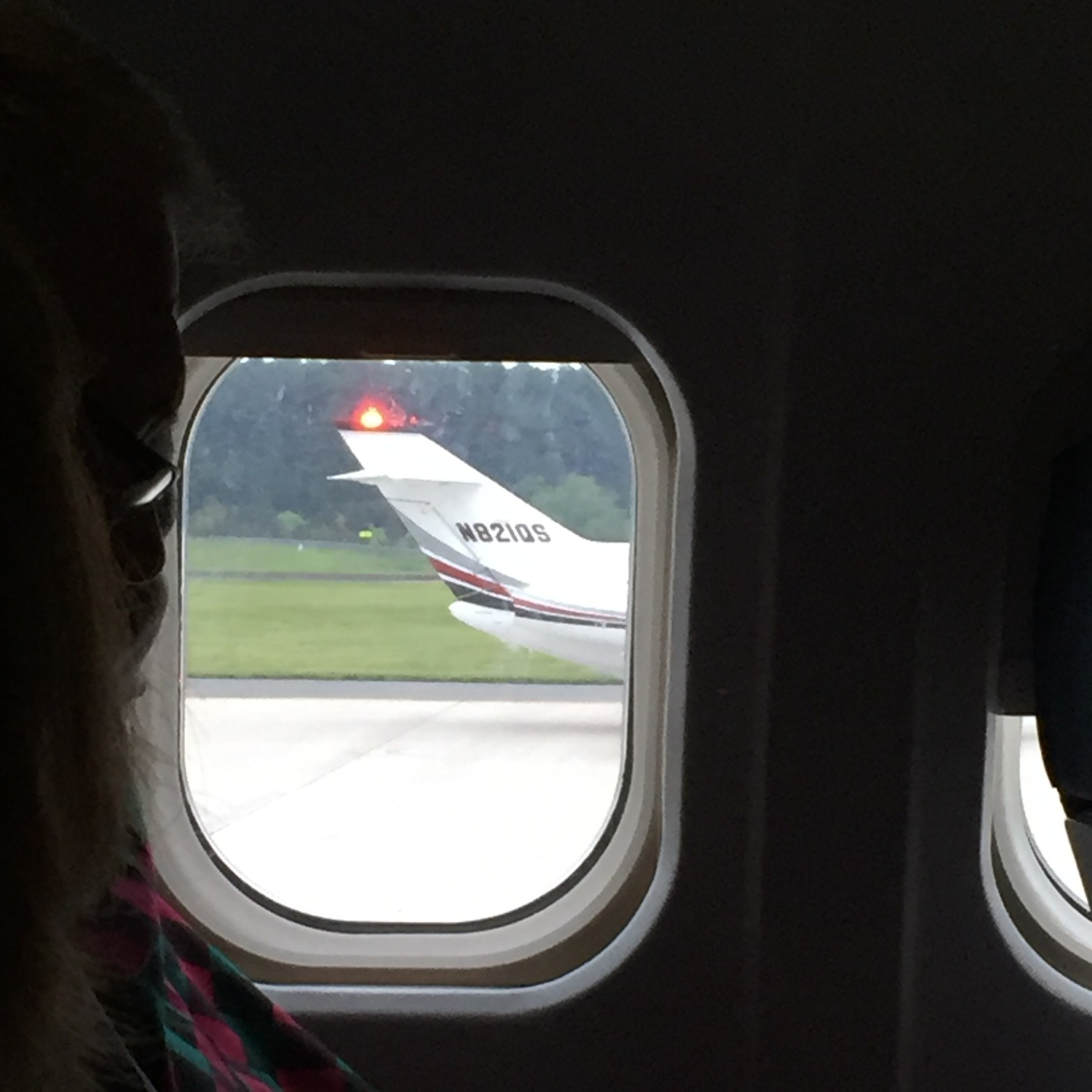
I am a pilot. I learned to fly to fly before I learned to drive. I started to work when I was 13 years old and saved every penny I made to pay for my flying. It was my dad’s airplane, but I had to pay for part of it. That’s who he was – a “you don’t get something for nothing” kind of person. By the time I was 16, I was holding down three jobs and was still an A student. I wanted to fly in the military, but they didn’t allow women at that time. So I stuck it out and worked hard. I detoured my career, was successful enough to retire at 43, then pursue my passion.
I never asked for special treatment. I never complained, when I was flying night freight, that some of the freight hangars didn’t have women’s restrooms. I used the men’s room and never thought twice about it. When we had to unload truck transmissions in Detroit, I used the pallet jack and moved the transmissions along with the guys. I’ve climbed on the wing of a DC-4 to measure the fuel level in the main tanks, and I’ve pumped oil out to the engines during flight. I’ve flown powerful people into Aspen, Colorado, where every approach requires precision and finesse. I’ve flown into East Hampton, New York, and into Ocean Reef, Florida. These are challenging runways, short and narrow, not runways that are two miles long.
Today, in the “Pilot Communications Network” was an email forwarded from Leonard Brunasso, a retired Delta Air Lines pilot who is now a check airman for Omni Air. The email was titled “The Age of the 707/DC-8” and it begins, “Those were the good ole days. Pilots back then were men…” You can just guess how far it went downhill from there, as he went on to insult every category of people except for white male pilots. From what I can gather, taxpayers paid for Leonard’s flight training, as he was an Air Force pilot. He refers to pilots “in the good ole days” as real men and refers to flight attendants as stewardesses who appreciated a little sexual harassment, and were “proud to be combatants in the sexual revolution.” He went on to say these women didn’t have any “plastic or composites” in their pectoral regions.
Rarely am I offended, but having been subjected to blatant sexual harassment and abuse in the cockpit, I have a few things to say to Leonard. I am beyond angry. I am furious. I am sad. I am, unfortunately, flooded with memories of clowns just like this guy who didn’t think I belonged. The ones who objectified women.
I’ve taught over 1000 people to fly and I have an impeccable record. I’ve shared my love of aviation with literally thousands of people. During nursing school, I would instruct in the wee hours of the morning and then go to the hospital in Charlotte for clinicals, then I’d go to the airport and fly afterwards. And I kept my grades up while I was doing it. I am as proud of my RN as I am my ATP and CFI.
I learned instrument flying with nothing more than needle, ball, and airspeed. I’ve made the decision to go or not, when flying fuel to some of the most remote villages in Alaska in a DC-4. I’ve manually calculated how much fuel to take on, and looked at prog charts to see whether it was even safe to go. I didn’t have dispatch to calculate weight and balance for me, tell me how the weather was, and determine whether I’d be released to fly or not. I made those decisions, on my own.
I worked my way into the cockpit with my skills and abilities to fly. I’ve been pinched, grabbed in inappropriate places, and even been physically assaulted by other pilots. I’ve been asked whether I ever felt guilty taking a job away from some poor man trying to feed his family and when I’ve adjusted the temperature in the cockpit, I’ve been asked if I was having hot flashes. I knew when someone was having fun and when the line was being crossed.
When I first became a flight instructor, there were only about 4000 women in the US with commercial pilot certificates. I was one of the youngest, since I was only 18. Today, 40 years later with my Airline Transport Pilot certificate, I am one of only about 8000. I’m proud of what I’ve accomplished. I’ve got more than 45 years in the cockpit plus I’ve earned a PhD, started 3 or 4 successful businesses, and have tried to be the best person I can be. I’m happily married to a retired Delta pilot who recognizes and appreciates my brains and my talent.
I want to say all kinds of ugly things to Leonard, but it would do no good. I just hope that someday, this brand of pilots is replaced by kinder, more respectful human beings, by people who don’t care whether you are male or female, provided you can competently perform your duties in the cockpit or in the cabin.
Honestly, I just wish people would accept other people for who they are. Be kind. And stop spreading messages that promote hate. Can’t we all just get along and treat everyone as human beings?
Can We Repair the American Savings Crisis?
By Dr. Tim Price, CPA, Faculty Member, School of Business, and Dr. Suzanne Minarcine, Faculty Director, School of Business, American Public University. Originally published at http://onlinecareertips.com/2017/06/can-repair-american-savings-crisis/
The United States historically has had one of the lowest savings rates in the industrialized world. Arguably, the biggest contributor to this phenomenon is consumerism, the idea that everyone should always acquire more goods and services.
Consumerism is so ingrained in our culture that we no longer notice its effects:
- Household debt has increased to dangerous levels. Household debt was $12.58 trillion at the end of 2016, according to a report by the Federal Reserve Bank of New York.
- 47% of American families could not come up with $400 to pay for a family emergency, according to a surveyconducted by the Federal Reserve Board.
- A study from the Pew Charitable Trusts labeled nearly half of American adults as “financially fragile.”
Constant Advertising Encourages Spending, Not Saving
We are bombarded with advertising that encourages us to shop. We’re offered low interest rates on vehicles and we’re told there is a drug to fix whatever ailment we might have. Credit card offers arrive in the mail almost daily, each with its own incentives to make purchases.
Are you too busy to cook but don’t want to eat out? There’s an advertisement for that, too.
Consumer electronics are nearly obsolete before they ever hit the market. For example, Apple releases a new iPhone almost every year, and we need to buy the latest and greatest version, of course.
We are constantly encouraged to spend, no matter what we are doing. Go on Web browsers and social media, and ads will pop up based on your browsing history. We are targeted for spending.
The dollars spent on advertising in the U.S. are significantly higher than in any other country. The spending feeds on itself; you fall into the trap of buying more goods and services to keep up with your neighbors and friends.
How Can We Encourage Americans to Start Saving?
There is much discussion about low U.S. savings rates, but no one individual or group is actively promoting ways to increase them. For example, U.S. policymakers could add tax incentives to encourage savings. Other suggestions include increasing the tax-deductible amounts on IRAs and 401(k)s and making some or all of your interest and dividend income tax-exempt.
For regular savings accounts, the money is taxed before it goes into savings. As interest accrues and the money grows, taxes are paid annually on the amount of interest earned.
Savings needs to be encouraged. Personal finance lessons should be embedded in the messages children receive from an early age, as early as kindergarten and extending into adulthood. Lessons in personal finance could be incorporated into school curricula, like science and math.
Low Savings Rates Means Less Saving and Less Money for Loans
At a macro level, low savings rates foster an increase in consumer spending, which spurs economic growth. However, it also means less investment in the economy, since your dollars are going to consumption rather than savings and investments. Less money in savings means banks have less money to lend.
The investment void is being largely filled by other countries. But there is no guarantee they will continue investing in the U.S. Many economists fear that if the U.S. does not get its federal budget deficit and national debt under control, foreign investors will flee or demand much higher interest rates.
Japan and Germany Have High Savings Rates but Less Economic Growth
It is interesting to note that countries like Japan and Germany have the opposite problem because they have high savings rates. However, that results in less consumer consumption and lower economic growth rates.
Consumer patterns are very different in these countries and putting money into savings accounts is encouraged. This cultural practice also contributes to the trade imbalance between those countries and the U.S.
The next generation is not likely to see any change in the situation unless the U.S. takes drastic action to reduce the deficit and national debt. If we do not, foreign investors will stop investing in the United States.
About the Authors
Dr. Tim Price is a faculty member in the School of Business at American Public University. His teaching interests include accounting, economics, finance and statistics. Tim holds a Ph.D. in Business Administration and an M.B.A. in Business Administration from the University of South Florida, as well as a B.S. in Accounting from Pennsylvania State University.
Dr. Suzanne Minarcine is the faculty director for the School of Business at American Public University. She currently teaches strategic management and entrepreneurship courses.
A Grieving Grandmother on Mother’s Day

I cannot fathom the grief of a mother who has lost a child. I look at my own children and how deeply I love them, and how much I’m willing to sacrifice for them, and my heart is filled with a passion that I cannot describe. I love my children more than life itself.
I’ve often said that being a grandmother is even better than being a mother; a grandmother is the best thing I could possibly be. The love I feel for my children is magnified in my love for my grandchildren, but part of that is because I’ve survived the teen years (let’s go ahead and admit that teens are not 100% lovable!) but I would still go to whatever lengths necessary to protect my children. In my older son’s words, “We didn’t need Rambo in our family; we had Mombo.” Any mother knows how much mothers everywhere loves their children and the lengths we would go to protect them. Except when we can’t.
I’m in a special category of grandmothers, and I didn’t want to be here. I didn’t ask for it and I didn’t want to be here. No one wants to lose someone they love, yet I am a grieving grandmother, times two. I’ve lost my first grandson and I’ve lost my first granddaughter. I’ve been to hell and back in the process. Both were tragic, needless deaths. Both are – and yes, I speak of them in the present tense because their spirits are very much with me – the children of my only daughter. She’s a great mother, a better mother than I was when she was young, and I can’t begin to imagine her suffering. Mother’s Day is not a happy day for her, though she needs to put on a happy face for her three living children.
There’s part of me that wants to quote Sheryl Sandberg in Option B, and say that Glenn and Carly would want us all to be happy and celebrate the day. It made both of them sad when we were sad or hurt, regardless of the reason. They were sensitive children. We aren’t honoring their memory through our tears. Yet knowing this doesn’t stop the intense pain. Supposedly it will get easier with time.
As a grandmother, I grieve for my grandchildren and I wonder who they would be now. Would Glenn drive me around in the Porsche, or would he prefer the Cadillac? Would he still think I’m the smartest person in the world? Would he still be delighted by everything his Bebob said? Would Glenn love Punkin as much as his siblings? Would Carly still love ballet? Would she still be so opinionated and such a daredevil? Would she still snuggle with me? My answer to all questions is yes.
But as a mother, I grieve most of all for my daughter. She’s not herself and she will never be the same person who brought Glenn home from the hospital. I see her struggle. I see her pain, sometimes written on her face and all over her, as visible as Nathaniel Hawthorne’s Scarlet Letter. Sometimes she puts on a brave face, but behind those beautiful blue eyes is a broken heart. As a mom, I can’t put a band aid on it and make it better. This is something a mom can’t fix, and that compounds my grief.
How will I spend this Mother’s Day? I’ll be on a plane for part of it, then I’ll be home. I’ll put on a brave face and will be grateful for the day and for the people who love me. I’ll be there for my daughter, and for her siblings who also hurt – though in a different way. I will celebrate the lives we have and those that we’ve lost, and I will hold my family just a little closer. I will be thankful for the time we had, and I will pray that other people will be sensitive to our emotions on this day.
Happy Mother’s Day.
 Dr. Suzanne Minarcine