Where do I even begin? It is bad enough that people check their phones in church, and yes, I admit I’m guilty. But that’s between me and God and between you and God. But the THEATRE????? During a performance????
Here are three reasons to turn off your phone before any theatre performance.
People have paid for tickets. The light from your screen distracts everyone around you. Turn it off.
You are setting a bad example for any young people around you. Have you forgotten how to be PRESENT???
The actors and musicians have worked an unbelievable amount of hours to give you an outstanding performance. They’ve rehearsed for weeks, lost sleep, skipped meals, and sacrificed their time and energy to memorize their lines. Then, if it is a musical, they’ve learned music AND dances. They know where they are to be every minute while they’re on stage. To have gotten up the nerve to audition is huge, and to have been selected in a very competitive process is an honor and a privilege. It is hard work. You do not have the right to throw cold water on their moment in the spotlight.
I love live theatre, whether it is on Broadway, off-Broadway, in Atlanta, or here in Macon, Georgia. We have some of the finest community theatre companies in the southeast.
I could write about talking and rustling paper, and coming in late, but the inability of some people to turn off their phones is my pet peeve of the evening. There is nothing on Facebook that is so important that you can’t wait until the show is over.
July, 1972. Our 1956 model Cessna 172 needed a paint job in the worst way. Its red and white paint was peeling badly, and the aluminum shone through almost all of the fuselage. My dad told me that if I wanted it painted so badly, I could strip it myself. Our deal was that he would buy the supplies, and I would do the work; then he would pay for the new paint. I could even pick out the new colors.
After reading the instructions on the acid, I put on my favorite Leon Russell t-shirt and a pair of cut-offs, pulled my hair into a ponytail, and headed to the airport.
I pulled the plane out of the hangar, set my radio to WSJS, AM 640 in Winston-Salem, and got to work. Paint the solution on an area, wait for it to bubble, then hose it off. Scrub, rinse, and repeat. Be careful not to get the acid on my bare legs and arms or my clothes. I figured it would take me about two weeks to do it right.
The sun gleamed off the aluminum. On the asphalt, it had to be at least 100 degrees. I would work for a few hours, wipe the sweat from my face, and fan myself with a towel. On a particularly hot day during my second week, I decided to let the water soak into my clean towel and drape it around my neck. Just as I poured some peanuts into my Coca-Cola, a man approached. “You’re doing a good job here, but you look like you could use a break. Why don’t you come over to my hangar and cool off? You can see what I’ve done to my plane.” I loved anything related to airplanes, and a chance to escape the heat sounded good.
I knew this guy was an elected official, a church deacon, and a Sunday School teacher. A member of the country club. My parents had voted for him. He was not the stranger we were always told would lure us away with candy. I was young and naïve enough to think that he was just being nice.
I followed him to the hangar. He used his key to unlock the door. I looked around and saw a sofa, a recliner, a refrigerator, and a television. It was like he had a living room in the same room as his airplane. This wasn’t really unusual; lots of people had furniture in their hangars. The airport was a place to come and hang out.
We walked over to his airplane, and he explained how he had changed out and updated all his avionics. Our old Cessna’s instruments only worked sporadically, which made me a better pilot, but I looked forward to flying something where I didn’t have to rely on anything more than a magnetic compass, though Daddy wasn’t in any hurry since college tuition would be due in the fall. But oh yes, I was impressed with the radios. This was state-of-the-art 1972 gear. He even had a Loran, a radio navigation device that we used before GPS.
“Why don’t you sit down for a while?” he said. “Cool off from the heat.” He smiled and pointed to the sofa in the corner of the hangar. Why not? I’d been working hard all day and deserved a break. I always enjoyed a good conversation, even an argument. The weather. Watergate. My college plans. Flying. I was one of only about 600 women certified as flight instructors in the United States, but none of my friends ever wanted to talk about flying.
He walked over to the refrigerator, pulled out a pitcher of water, and grabbed two glasses from the shelf. He poured two cups, handed me one, then sat down. “So what are your college plans?”
“I’m going to UNC-Greensboro. Right now I’m planning to study interior design, but that could change. I just need a degree in something before I apply for an airline job.”
“An airline job. That’s impressive,” he replied. “I don’t think there are any women flying for the airlines.”
“There aren’t any, right now, but there will be, and I want to be ready.”
“Do you have a boyfriend?”
This was a curious question, but maybe he was just being nice. “No, we broke up last year.”
I never anticipated what came next. He moved over and put his arm around my shoulder and tried to pull me closer. I backed away, horrified that this old man would touch me. He had to be at forty, probably even older than my parents! Who did he think he was, anyway?
As I backed away, he looked me in the eye. “My wife is very sick,” he started, “and I have needs she cannot fulfill. I need someone. I need someone discreet who will not tell and will not make any demands.”
I didn’t know what to say. His tone was formal, like he was discussing a business proposition, but this didn’t sound like business. Knowing who he was, though, I was trying to give him the benefit of the doubt.
I stared at him. “What kind of help do you need?” This is how naïve I was. I thought maybe he needed help with errands or something. I knew this wasn’t right, and I wanted to get away, but surely he wouldn’t be asking me something inappropriate. I was a good student; maybe he had a kid who needed tutoring. I knew nothing about his family.
“You’re a good kid, and I need discretion. Sex.”
There is no way to describe the revulsion I felt. Who did he think he was? Who did he think I was? I was outraged. I wanted to throw the glass across the hangar, but instead, I set it on the floor and stood up. What was it about me that made him think it was okay to ask me this? I was just a girl, a smart girl, but still with so many insecurities and already carrying so much pain that I wondered whether it emanated from my pores. What kind of vibes was I giving off? What had I done to deserve this?
And what kind of man thinks that because he has power and money, he has the right to insult a girl by propositioning her for sex? Had he done this before? How would he feel if another man said these inappropriate things to his daughter? Clearly, he was a man with no qualms about making inappropriate suggestions to a girl young enough to be his daughter.
One thing I knew for sure was that it wouldn’t do me any good to tell anyone. Who would even listen? What could I do? It would be his word against mine. I had learned long ago that no one ever believed the girl.
I walked out of the hangar and didn’t look back. I buried that conversation because that’s what we did. We didn’t talk about it. A girl making these outlandish accusations against someone so prominent in the community? In this state?
It was probably ten years after his death that I came across his obituary. I wasn’t looking. He was obviously able to maintain his image as a fine, upstanding man, but I knew differently, and probably others knew, too. He was just like any of the other creeps I have encountered, and it’s taken me years to get the courage to write about it.
If my mother reads this, I suspect she will ask me who it was, but I won’t tell her. I doubt she would have believed me then, and I’m not sure she would believe me now. Our dynamics are challenging, but I recognize how difficult it must have been for her to have me as a daughter. She grew up in a much simpler time, and here I was, breaking all the stereotypes.
But I know the truth.
Why am I discussing this now? More than fifty years have passed. Isn’t it time to let it go? No. Women are being marginalized once again, and all the progress we made in the latter part of the twentieth century is rapidly disappearing.
There are still men who believe they have the right to exploit girls or young women because of their position, wealth, or perceived power. We see this in politics and in the media. There’s even a podcast that instructs men on how to groom young women for sex. Predators are everywhere, and some mothers still won’t believe their daughters, while others continue to excuse the perpetrators.
For too long, women have remained silent about the abuse they’ve endured, as speaking up often leads to even more abuse. Almost weekly, we hear about another respected church leader who has been arrested for molestation or related crimes.
It’s time we talk to our daughters and granddaughters about their self-worth and that we support them when they speak out. It’s time we support the victims, as we have failed to do so on so many occasions. Most importantly, it’s time we teach our boys that women are not property and should be treated with respect.
We need to teach our girls and our boys that “NO” is a complete sentence.
It was the worst weekend I’d ever had. I had sold my flight school and was rudderless, floating without a job and in the middle of a divorce. What was I going to do with myself? An FAA inspector told me he had given my resume to Bob McSwiggan with Custom Air Cargo, but I hadn’t heard anything. On this particular weekend, I had wasted two days lying on the sofa and watching Lifetime movies. I hadn’t even brushed my hair. My diet consisted of popcorn and pimento cheese sandwiches. This was my lowest low.
It was late on a Sunday afternoon when the telephone rang, and for a brief moment, I considered ignoring it. “Hello?” I answered.
A gruff baritone voice responded, “This is Bob McSwiggan. Want to go see the airplanes? I’ll pick you up in an hour.”
No, I didn’t really want to go, but I knew it was best if I did. I needed this job. Fine. I jumped in the shower, washed my hair, swiped on some mascara and lip gloss, and then sat at my baby grand piano to tune my harp. Right on time, the doorbell rang.
He stepped into the house and exclaimed, “Oh, you’re musical! Guess what I do for exercise?”
Rarely am I at a loss for words, but there was a round man with thick grey hair, and I had no idea.
“I dance!”
“That’s great!” I responded. “I used to dance, too.”
He shared his history of heart problems and told me the doctor wanted him to start walking and going to the gym. He didn’t enjoy either one, so he began taking dance lessons at Doris Russell School of Performing Arts. He took ballroom, tap, and modern dance lessons. This conversation would continue.
As we drove the thirty minutes to the airport, McSwiggan explained that Custom Air Cargo was a freight carrier and flights would be at night. The cargo would be almost exclusively auto parts. I love night flying so this sounded like a lot of fun, even though I wasn’t guaranteed a regular schedule and he could not promise a steady income. I would figure something out.
We arrived at Tara Field, where N89FA sat on the ramp alongside a DC-3. N89FA was a DC-4 modified by Freddie Laker in the early 60s to haul cars between England and mainland Europe. McSwiggan got out a ladder so we could climb on the wing. From there, we climbed through a window into the fuselage, then climbed another ladder to reach the cockpit. The cockpit was basic, with the original round gauges and a tiller on the left for ground steering. This was going to be fun. The rest of the afternoon was spent touring the hangar and orienting me to the two antique aircraft and flight operations.
I was excited to read the materials McSwiggan had given me and couldn’t wait for his phone call. I didn’t have to wait long. As I was watching the Weather Channel, my phone rang.
“Suzanne? Ready to fly? We’re going to Birmingham and then on to Ypsilanti. Be here at four,” McSwiggan said.
“Four? Are you kidding me? You don’t even have radar on the airplane!”
“Oh, you don’t need radar,” he chuckled. “It just scares the pilots.”
It sure as heck scared me, but I got dressed anyway before grabbing a peanut butter sandwich and heading for the airport. McSwiggan greeted me with a big smile and introduced me to the mechanics and the rest of his team. I marveled at the idea that a 60,000-pound airplane could take off on a 4400-foot runway – not even a mile!
We did a careful preflight walkaround before climbing the two ladders into the cockpit. There were four of us flying that night, and two were training. The other new pilot, Tom, would become a friend. He and I would rotate trips. McSwiggan brought soft drinks, ham, cheese, bread, mustard, and potato chips to feed the crew on the flight.
Our trip was seventeen hours long, and I quickly learned that freight hangars did not have women’s restrooms. I would have to make do with the men’s room, though one of the other pilots agreed to stand guard at the door. We arrived at Tara Field in time for me to drive home and collapse in bed. I was exhausted.
Bob McSwiggan, or “Mac,” became a cherished friend. We danced together on Tuesday nights and often left our dance class for a trip. After I went to work for Netjets, I would occasionally go to the hangar and visit him on my days off. He wrote a poem for my husband and me on our wedding day, and he stayed with me after our grandson was killed.
Our visits became less frequent after my family moved to Macon, but we still talked on the phone. In 2019, my phone rang, and I was greeted again by the big voice I had grown to love.
“I don’t know who this is but I saw the number in my phone and I knew you were someone important to me.”
My heart broke. I told him who I was and did my best to help him remember. I recounted funny details about some of our trips and our dancing, and he said he remembered. I knew he didn’t but I knew he wanted to. It was a tender call, and I cherish the memory.
Mac’s girlfriend called last week and said that he had died about three months ago. She didn’t know the details as three years ago, his great-grandchildren moved him to South Carolina and placed him in a nursing home.
May is Bladder Cancer Awareness Month, and I had intended to post daily about this disease that affects about 18 out of every 100,000 people in the United States. When the cancer is limited to the lining of the bladder, the five-year survival rate is 96%. If the tumor is still confined to the bladder but has not spread outside to other tissues or organs, the survival rate is 70%. Since my husband was diagnosed, we have known two people who have died from this disease. We have another friend who was diagnosed and had his bladder removed. We know that is always a possibility.
When my husband was diagnosed and the doctor here in Macon refused to try and get the BCG to treat him, I was furious. I felt the doctor here was just going to sit back and let my husband die. I asked Bob to call Dr. James Bennett, his previous urologist in Atlanta. Dr. Bennett had treated Bob for prostate cancer and had been his urologist until we moved to Macon, approximately ninety minutes away. We loved Dr. Bennett and his office, but since it had been seven years since the prostate cancer, we felt safe in transferring his care.
Dr. Bennett saw us right away. “I can get the BCG, but there is a worldwide shortage so it may take a couple of weeks. You’ll get one infusion every week. After the infusion, you’ll lie on your back for fifteen minutes, rotate to your side for fifteen minutes, your abdomen for fifteen minutes, and then your other side. We’ll do cystoscopies every three months until you’ve been clear for a year.”
Great. My husband was going to be like a rotisserie chicken. At least he’s being treated.
Four months later, the cancer was back. Another round of BCG. This would be our routine for the next eighteen months. Dr. Bennett and his office were wonderfully supportive.
After each procedure, Bob would need a catheter for three or four days. Sometimes, the catheter would plug due to blood clots, and we’d go to the emergency room. Although I had what I needed to irrigate the catheter, I was afraid.
As time went on, the tumors returned less frequently, but Bob would sometimes develop urinary tract infections. I could always tell by changes in his cognitive status. He’d go on antibiotics, and the infection would clear, but he would require close supervision for a few days.
In 2022, the infections became more frequent. Bob also has atrial fibrillation and glaucoma, but he doesn’t see any limitations, and he doesn’t notice when changes occur. In February of 2023, I noticed that his urinary stream sounded very weak, and he wasn’t thinking clearly. His urethra was obstructed, so we made an appointment with Dr. Bennett, who arranged for a cystoscopy to clear the stricture.
The stricture this time required general anesthesia. Things happened quickly in the operating room, and there was a lot of blood. Dr. Bennett used a large catheter to provide pressure and stop the bleeding. We were able to remove the catheter in a week, but we had to repeat the process two months later and then a month later. The stricture would return.
This was just unsustainable.
More on this tomorrow, but if you or someone you love are having blood in the urine, please get yourself checked.
It was a three-hour flight, and I’ve seen him pass down the aisle at least three times. Did he really drink that much coffee? I wondered how often my husband could get up to the bathroom on our flight from Salt Lake City to Atlanta. It was 2019, and we had flown out to bring our grandchildren home to their mom.
“I’m bleeding,” Bob said softly to me as soon as we got off the plane so the grandchildren couldn’t hear. “Urine.” My heart stopped. Was his prostate cancer back? He’s been cancer-free for ten years. What else could it be?
My husband looks like the healthiest person in the world. He works out at the gym daily and is like the Energizer Bunny. He never stops moving. He would still be flying if it weren’t for his defibrillator, but since he retired, he has taken care of the house and even grocery shopping. He’s in a perpetual good mood, and nothing gets him down.
“Don’t worry,” I said. “We’ll call the urologist on Monday.”
He was quiet on the drive from the airport home. I wondered what he was thinking and how he was feeling, but I knew not to say anything so the grandchildren wouldn’t be upset. Monday morning couldn’t come too soon.
Bob called the urologist on Monday morning. We waited for a return phone call. He called again on Tuesday and left a message. Finally, on Thursday, the nurse called back.
“We’re scheduling you for surgery,” the nurse told him. “We’ll call you when it’s scheduled.”
While I wasn’t completely comfortable with the doctor scheduling surgery without seeing my husband, I knew that a cystoscopy was necessary to see what was going on. But didn’t he need to do any preop paperwork? Didn’t he need a preop exam? At least a phone call would have been helpful.
Two weeks later, I sat at my husband’s bedside while he was awaiting surgery. The urologist came in and explained what he was going to do. He was going to send up an instrument into the bladder to look around. We signed the operative permits, and I moved to the waiting room.
Several hours later, the doctor came in and sat down beside me.
“Your husband has bladder cancer,” the doctor said as he drew a picture to show me the location. This doctor is known for drawing pictures, and he drew a picture of a penis and urethra leading up to the bladder.
“My grandfather died from bladder cancer,” I told him.
“Yeah, but back then they probably did it with a candle,” he laughed. I wasn’t feeling humorous and I remember not appreciating his attempts at humor. I remembered how hard the diagnosis was on my grandparents.
“There are two kinds, high grade, and low grade, and we won’t know until the pathology comes back which kind it is. In the meantime, do not get on the internet and scare yourself. We’ll call you with the results and reschedule a follow-up cystoscopy to see what’s going on.”
The doctor’s son was a friend of our youngest grandson, and he knew both of us from the private school they attended. He knew me, knew that I am a nurse, and that I’d be on Google as soon as he left.
I couldn’t shake the vision of my grandfather standing in front of the sink in the powder room of my home, struggling to manage his ileostomy. This couldn’t be happening. My grandparents stopped traveling soon after.
Waiting was so hard.
The pathology report was terrifying. High-grade urothelial cell carcinoma. “The treatment of choice is BCG infusions into the bladder each week for six weeks, but we can’t get BCG, so we’ll see you in a year.”
The doctor was going to do nothing when there was a treatment for bladder cancer? Were we supposed to accept this? Images of my grandfather kept coming back.
Doing nothing was totally unacceptable. My husband could die.
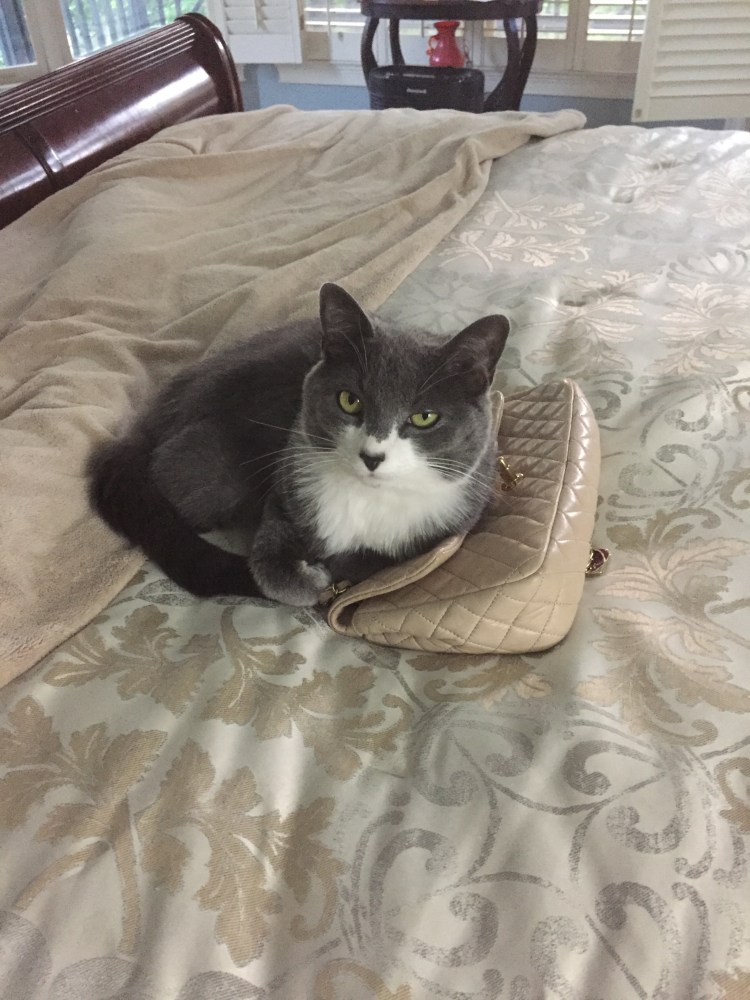
Chanel was born in May 2011. On February 14, 2012, she received the greatest gift of love and officially became Chanel Minarcine. Bob and Suzanne went to the Monroe County Animal Shelter to adopt a specific cat who wanted nothing to do with them! Chanel knew as soon as they walked in the door that these were her humans, and she was going home with them. Thus began the next eleven years of Chanel’s pampered life of love and luxury.
In February 2016, Chanel was sent to a sabbatical at her veterinarian’s office. On February 24, 2016, she chose to embark on her own rumspringa when the vet tech opened two cages at once, while the backdoor was open. Chanel saw her chance and took off! During this time, Chanel attempted to join a gang of feral cats and got into at least one street fight. After over three long weeks, she decided she was better built for a life of luxury. Chanel did not know that all of Macon was on the lookout or that a large cash reward was being offered, but she walked right up to a stranger’s house, and they brought her home!
During the Covid pandemic, Chanel enjoyed having her 9 living nieces and nephews in the house for virtual learning and quarantine. She learned that while she mildly enjoyed the snuggles, she did not enjoy second grade. Covid did bring quarantine dinner with friends, spread out on the porch and eventually into the house. While the adults ate delicious dinners, Chanel was spoiled with catnip, treats, and toys.
Chanel enjoyed mornings on the porch enjoying the weather and beautiful view of Lake Redwine. Neighborhood cats would come to visit, and she would remind them they were not allowed inside the house.
Chanel brought comfort to her family during their darkest days and deepest sorrows. She often hid from the excitement of joyous celebrations, though she would come through every so often to make sure everyone was still enjoying themselves. Chanel was a great friend who knew how to simply be present when we needed a listening ear or a comforting presence.
In March, Chanel’s loving humans noticed that she was not going out on the porch or eating. On March 30, her breathing became exceptionally labored. A trip to her least favorite place – the vet – discovered fluid in her chest and abdomen. It was difficult to see her heart or lungs because of all the fluid, though a mass was seen. Bob and Suzanne chose to bring Chanel home on palliative care and love her for whatever time she had left on this earth. The next three weeks were filled with love, snuggles, a few arguments with her over taking her medication, and video chats with her favorite people.
On April 24, 2023, Chanel Minarcine savored one more video chat and the comfort of her humans’ cozy bed.


 Dr. Suzanne Minarcine